
Drip Irrigation
Precision Wastewater Distribution for Challenging Sites
Drip irrigation systems provide a highly controlled method of wastewater dispersal, ideal for areas with restrictive soil conditions or limited space. By delivering small, timed doses of effluent through specialized tubing and emitters, these systems allow for even, low-volume treatment that protects groundwater and promotes long-term system performance.
How It Works
Drip Irrigation System
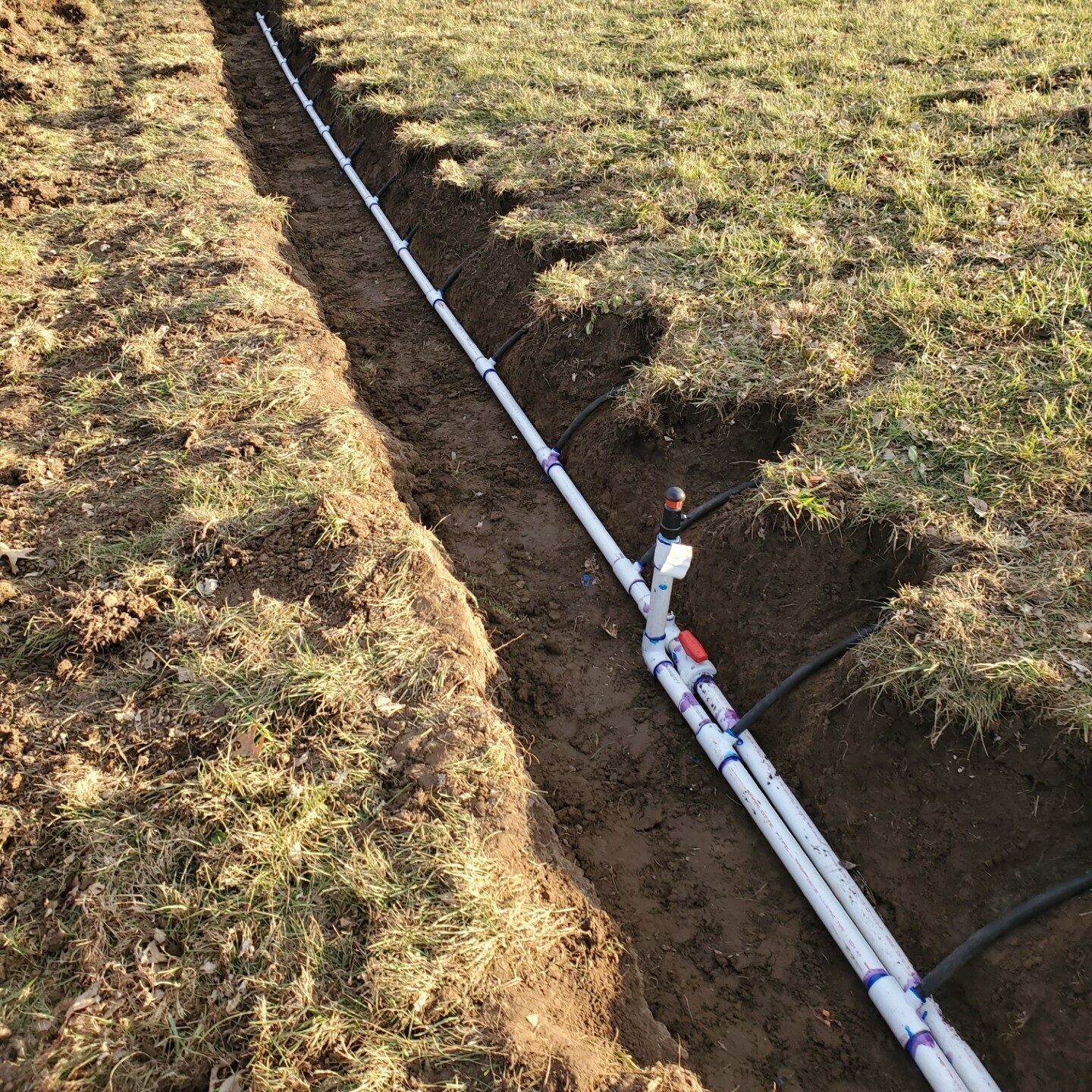
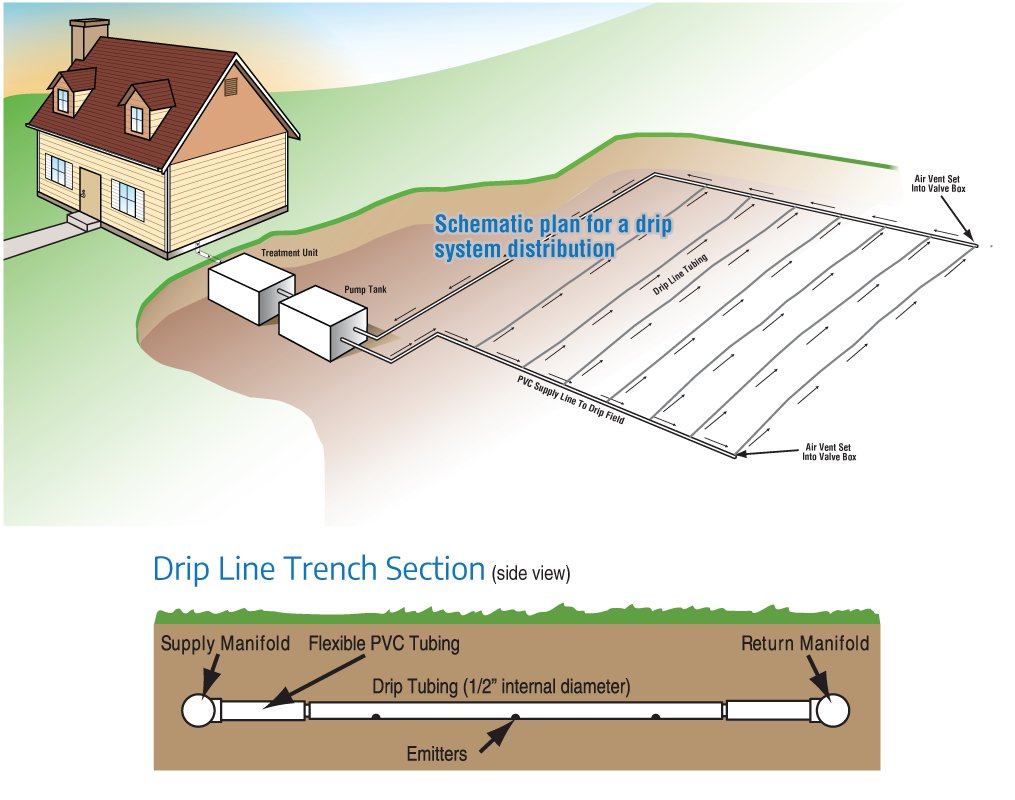
Before reaching the pump tank, household waste is treated in an Aerated Treatment Unit or Trickling Biofilter, where oxygen enhances microbial breakdown of waste. Once treated, the effluent is delivered to the drip line absorption field in small doses.
This method:
Allows soil with limitations to be used effectively.
Ensures effluent is well-treated before entering groundwater.
Provides consistent dosing to prevent overloading the soil.
Drip Pump Tank
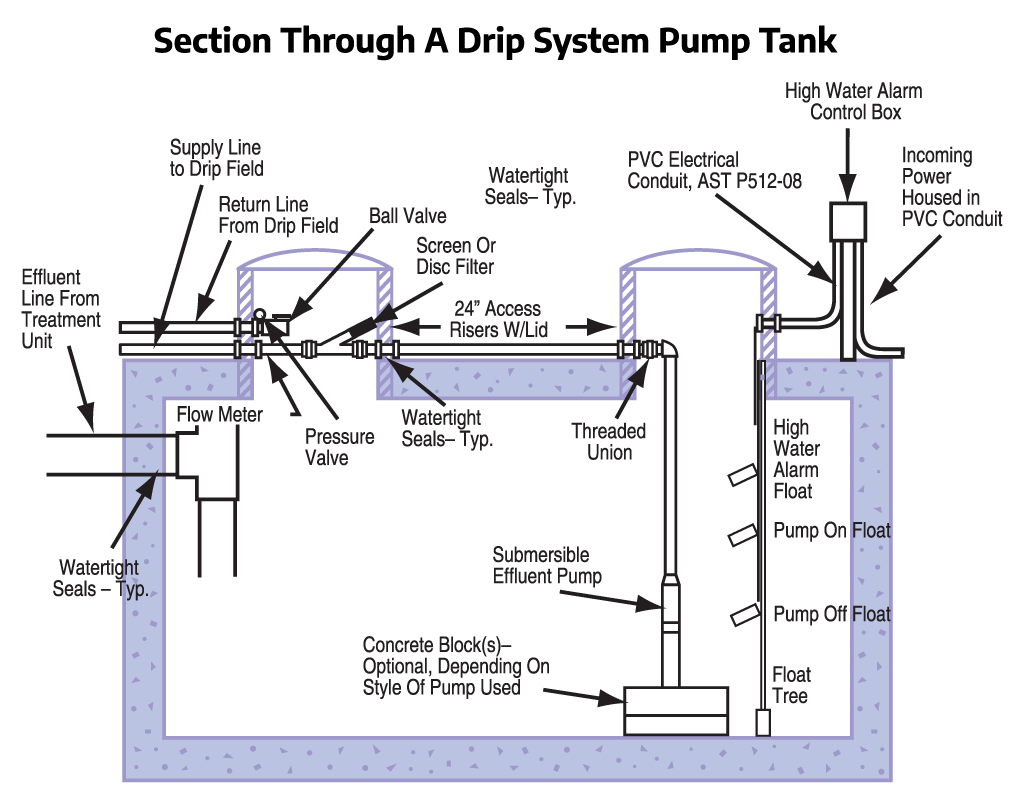
After wastewater undergoes primary and secondary treatment, the effluent flows into a pump tank equipped with control floats and a timer system. This pump sends the effluent through a final filter to remove particles that could clog the emitters in the tubing.
From there, the effluent circulates through the drip tubing. A ball valve helps build pressure, allowing the water to exit each emitter at a controlled rate of ½ to 1 gallon per hour, ensuring even distribution into the soil.
Why Regular Maintenance Is Essential
Failing to maintain your drip irrigation system can lead to major health and financial consequences, especially in systems designed for sensitive or space-limited areas.
Health Risks
Untreated wastewater may carry harmful pathogens and chemicals that contaminate groundwater and wells. Common risks include:
Hepatitis A
Salmonella

Giardiasis
Cholera
Tetanus
Typhoid fever
It can also contribute to nutrient pollution in waterways through nitrogen and phosphorus runoff.
Financial Risks
Regular pumping and maintenance typically cost $150–$300. A failed system may require a full replacement ranging from $10,000 to $45,000, assuming replacement is even possible on the property.
Do’s of Drip System Maintenance
- Obtain permits before repairs or changes
- Hire certified professionals for installation and servicing
- Keep tanks and lids accessible and child-safe
- Pump tanks every 2–5 years
- Track all maintenance and inspections
- Divert stormwater runoff away from the system
- Use water-saving fixtures and conserve indoor water use
- Dispose of chemicals properly at authorized centers
Don’ts of Drip System Use
- Never enter a septic tank, toxic gases can be fatal
- Don’t drive or park on the system
- Don’t plant trees or shrubs near drip lines
- Don’t pour fats, solvents, or medications down drains
- Don’t flush wipes, diapers, or non-degradable items
- Don’t use septic additives, they often harm your system
Want to Learn More?
View our Drip Irrigation Homeowner Brochure (PDF) for a visual guide.
Questions? We’re here to help.
contact@mosmallflows.org
(417) 631-4027